
A note from Shepherd & Co
Before we begin

We wrote this guide because we kept having the same conversation.
It usually happens on someone's second or third trip. They have spent time in Hobart, Launceston, the Huon, the Channel or the East Coast, and something in them has quietly shifted. Somewhere along the way, they began imagining a different life.
By the time they call us, they have often already made two or three small decisions that may cost them later. Not disastrous ones — just the ordinary, well-meaning decisions buyers make when Tasmania appears, on the surface, more straightforward than it is.
“The most expensive of them are almost always made quickly, on a weekend, with less information than anyone realised at the time.”
This is especially common among people looking from interstate or abroad. But it also happens to returning Tasmanians, and to locals buying into a region they do not know well.
Tasmania is small. But it is not simple.
The email we receive most weeks is a version of the same question. Someone in Sydney, or Brisbane, or occasionally much further afield has fallen for a weatherboard cottage in Cygnet, a mid-century home on the slopes of West Hobart, or a shack near Bicheno — a modest holiday house, not a derelict one — that stopped them scrolling in their tracks. They want to know whether we think it is a good buy.
We rarely answer that question immediately. Not because we are evasive, but because it can only be answered honestly after a different one has been answered first:
What kind of lifestyle do you envisage living here?
Tasmania rewards buyers who can answer that.
The state has a way of amplifying whatever intention you brought with you — including the hazy ones — and turning it into tangible consequences.
The forty-five-minute drive that looked charming on a map turns out to be the Southern Outlet twice a day in July, or an hour and ten in weather. The renovation costed at mainland rates, before anyone discovered the district's builders are booked well ahead. You set out to buy a life, and the house arrives attached to it.
Forty-five minutes is not what you think it is
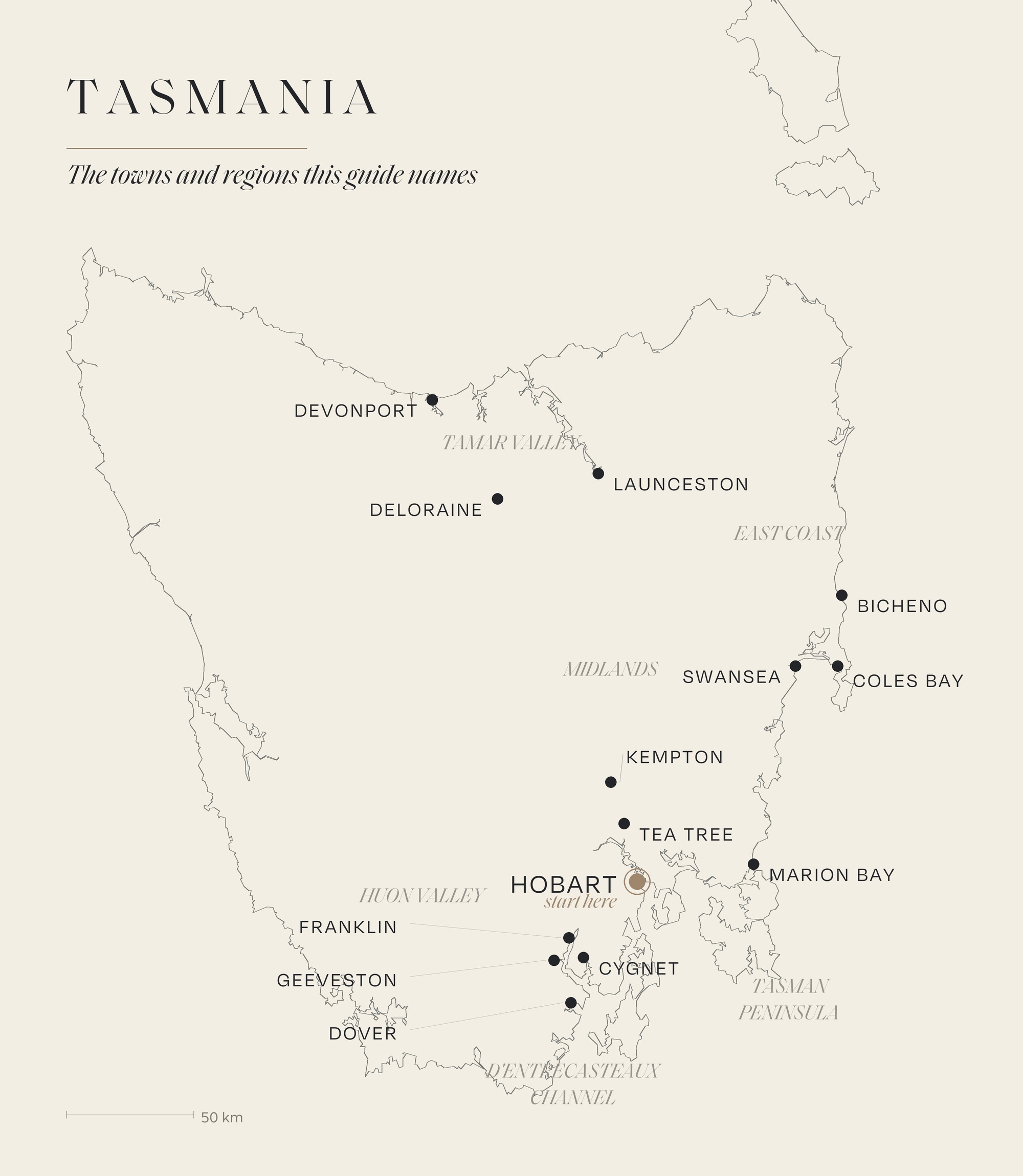
Before the place names begin arriving, the distances are worth a word, because they do not behave the way mainland distances do. Forty-five minutes out of Sydney is another suburb. Forty-five minutes out of Hobart is another landscape, and frequently another climate.
Drive north for forty-five minutes and you are at Kempton, in open Midlands grazing country that takes roughly half the rainfall of the Huon. The same forty-five minutes south-west puts you in Cygnet, among orchards and gullies that stay wet well into spring. East, across the causeways, it is Marion Bay and open water.
So a radius drawn around Hobart tells you very little. Two houses the same driving time from town can sit in different rainfall, different frost, different soil and quite different communities. And the drive is governed by the road rather than the kilometres — a route that runs beautifully at ten in the morning is a different road at eight, and different again in winter.
“The property is downstream of the life.”
This guide isn't a checklist, and it isn't a sales brochure. It's the conversation we wish we could have with every considered buyer before they book their first inspection trip or fall in love with a particular house — because the mistakes that matter most are almost always made in the quiet months before anyone thinks a mistake is even possible.
We hope the following pages help solidify your thinking, raise some questions, and answer others.
— The team at Shepherd & Co